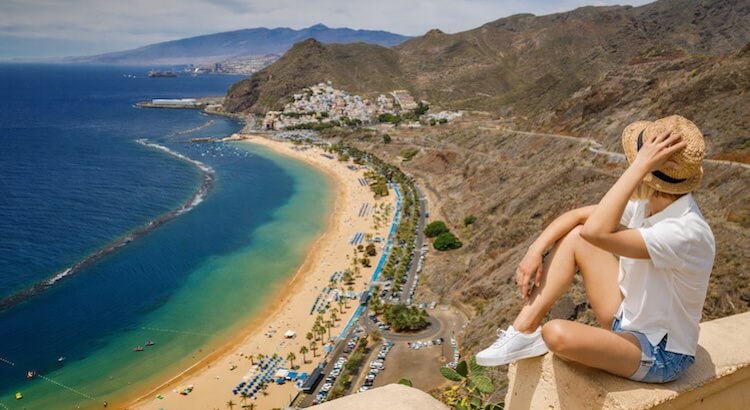
Tenerife has “good weather” year-round, but it isn’t one uniform forecast.
In the same month, the south’s main resorts (Costa Adeje, Playa de las Américas, Los Cristianos) are usually warmer and drier, while the north coast (Puerto de la Cruz, La Orotava valley, Santa Cruz area) more often gets cloud cover and showers.
Use this guide to plan realistically: typical highs/lows, how humidity feels, what to pack each month, and when school-holiday crowds tend to push prices up.
Key takeaways
- • The south is typically sunnier and drier; the north is often cooler, cloudier, and more likely to see rain, especially from October to March.
- • “Humidity feel” matters more than the temperature number: a breezy 21°C can feel perfect in the south, while the same 21°C can feel damp and chilly in the north when the cloud layer sits low.
- • Pack for microclimates: beachwear plus one warm layer is the winning combo for most months, and you’ll want a light rain shell in the north in winter.
- • Big crowd/price spikes usually line up with Christmas/New Year, Easter (Semana Santa), and summer school holidays.
North vs South in plain English (why it can feel like two islands)
The headline difference is not “north = cold, south = hot.” It’s more like: south = more sun hours and fewer wet days; north = more cloud and more humidity, especially when the trade-wind cloud layer forms on the north-facing slopes.
As a simple benchmark, official Tenerife climate normals commonly used in tourism planning show mild average monthly temperatures and very low summer rainfall at low altitude, but they don’t capture day-to-day cloudiness differences between coasts.
- South resorts are more sheltered and often sit below the cloud layer, so days feel brighter and warmer.
- The north coast is greener for a reason: moisture and showers are more common, especially in late autumn and winter.
- Altitude changes everything: a 20–30 minute drive uphill can drop temperatures noticeably, even in August.
For a reference point on overall island averages, Tenerife Tourism (Film Commission) publishes monthly averages for temperature, sunshine hours, and rainfall (period 1971–2000). In that dataset, July and August are the warmest and driest months, while December is among the wettest months. (Source: Tenerife Film Commission climate normals page: https://www.webtenerife.co.uk/tenerifefilm/about-tenerife/climate/valores-climatologicos-normales/ )
Typical temperatures & “humidity feel” by season
Before the month-by-month packing lists, it helps to know what usually drives comfort:
- Winter (Dec–Feb): South days are often T-shirt weather in the sun, but evenings can feel cool; the north can feel damp and chilly when clouds and light rain roll in.
- Spring (Mar–May): One of the easiest times to split your stay between north and south; you’ll still want a light layer for nights and for the north.
- Summer (Jun–Sep): The south is reliably beach-friendly; the north is also warm, but can stay “bright-overcast” more often, and humidity can feel higher.
- Autumn (Oct–Nov): Often very pleasant in the south; the north sees a higher chance of Atlantic fronts and showers, especially later in November.
If you want a concrete north-coast example, Puerto de la Cruz climate summaries show average highs in the low-to-mid 20s °C in summer and around the low 20s °C in winter, with a wetter period centered on late autumn and winter. (Example reference: WeatherSpark Puerto de la Cruz year-round climate page: https://weatherspark.com/y/31610/Average-Weather-in-Puerto-de-la-Cruz-Spain-Year-Round )
Tenerife weather by month (north vs south) + what to pack
Temperatures below are typical ranges you’ll see quoted for coastal areas, but daily reality depends on wind, cloud, and where you stay on the slope.
South resorts: think Costa Adeje / Playa de las Américas / Los Cristianos.
North coast: think Puerto de la Cruz / Santa Cruz area / La Orotava valley coast.
- January — South: mild days, cool nights; North: cooler and more humid, with more chance of showers.
- Typical highs/lows: South ~18–21°C / 12–14°C; North ~19–22°C / 13–16°C (but can feel cooler under cloud).
- Humidity feel: South usually comfortable in the sun; north can feel damp in shade.
- What to pack: light jacket, thin jumper, long trousers for evenings, compact umbrella or light rain shell for the north, swimwear for sunny south days.
- Crowds/prices: High around New Year (early January) and winter sun demand.
- February — Similar to January, often slightly steadier; north still cloud-prone.
- Typical highs/lows: South ~18–22°C / 12–14°C; North ~19–22°C / 13–16°C.
- Humidity feel: Breezy and pleasant in the south; cooler-feeling in the north when clouds sit low.
- What to pack: layers, light rain shell, trainers for walks, a warmer top if you plan Teide viewpoints.
- Crowds/prices: Often busy with winter escapes; can be calmer mid-month outside school breaks.
- March — Early spring; south warms up first.
- Typical highs/lows: South ~19–23°C / 13–15°C; North ~19–23°C / 14–16°C.
- Humidity feel: Usually comfortable; north can still feel “fresh” in evenings.
- What to pack: T-shirts, one light jacket, closed-toe shoes for hikes, a light rain layer if you’ll be north-based.
- Crowds/prices: Can climb late March when Easter approaches.
- April — Warmer days, better odds of clear weather island-wide.
- Typical highs/lows: South ~20–24°C / 13–16°C; North ~20–24°C / 14–17°C.
- Humidity feel: Pleasant; north still gets the occasional cloudy spell.
- What to pack: light layers, swimwear, sunscreen, a thin hoodie for evenings, rain shell if staying in the north.
- Crowds/prices: Peak during Semana Santa (Holy Week). In 2026, Holy Week in Spain runs from March 29 to April 5. (Reference: Idealista dates overview: https://www.idealista.com/en/news/lifestyle-in-spain/2025/03/26/811148-holy-week-spain-key-dates-on-when-it-starts-and-when-it-ends )
- May — One of the best “sweet spot” months.
- Typical highs/lows: South ~21–25°C / 14–17°C; North ~21–25°C / 15–18°C.
- Humidity feel: Generally comfortable; north can feel humid on cloudy days.
- What to pack: summer clothes, light jacket for nights, swimwear, hat, and a light windbreaker for coastal walks.
- Crowds/prices: Often moderate, but can bump around late-May half-term travel from abroad.
- June — Proper summer starts, especially in the south.
- Typical highs/lows: South ~23–27°C / 16–19°C; North ~22–26°C / 17–20°C.
- Humidity feel: South usually dry and sunny; north can feel warmer than expected when humidity rises.
- What to pack: breathable clothes, sunglasses, sunscreen, a light layer for evenings, and a wind layer if you’re sensitive to breezes.
- Crowds/prices: Starts rising toward school holiday season.
- July — Hotter, driest feel; south is reliably beachy.
- Typical highs/lows: South ~25–29°C / 18–21°C; North ~24–28°C / 19–21°C.
- Humidity feel: Often “dry heat” in the south; north can feel sticky in still air.
- What to pack: lightweight summer kit, reef shoes if you plan rocky coves, high-SPF sunscreen, and one light sweater for air-conditioned spaces.
- Crowds/prices: Peak season begins with summer school holidays.
- August — Warmest month for many visitors; hot inland and in sheltered spots.
- Typical highs/lows: South ~26–30°C / 19–22°C; North ~25–29°C / 20–22°C.
- Humidity feel: Can feel heavy during humid spells; the north can feel muggy when overcast.
- What to pack: very light clothing, sun hat, after-sun, insect repellent for evenings, and a light rain-free wind layer for breezy promenades.
- Crowds/prices: Very high due to European summer holidays.
- September — Still summer-like, often calmer than August.
- Typical highs/lows: South ~25–29°C / 18–21°C; North ~24–28°C / 19–21°C.
- Humidity feel: Can be warm and humid; sea temperatures are often at their most comfortable.
- What to pack: summer wardrobe plus a light layer for evenings, sunscreen, comfortable sandals, and trainers for volcanic trails.
- Crowds/prices: Often ease after peak family holiday weeks.
- October — A favourite for “warm but not scorching,” especially in the south.
- Typical highs/lows: South ~24–28°C / 17–20°C; North ~23–27°C / 18–20°C.
- Humidity feel: Comfortable, but showers become more plausible in the north.
- What to pack: mix of summer clothes and one warmer layer, light rain shell (north), swimwear, and a thin scarf for windy evenings.
- Crowds/prices: Can spike around autumn half-term travel (varies by country/region).
- November — Noticeably more changeable in the north; south often stays very usable for beach days.
- Typical highs/lows: South ~21–25°C / 15–18°C; North ~21–24°C / 16–18°C.
- Humidity feel: North can feel damp after showers; south feels mild but evenings cool down.
- What to pack: light jacket, long trousers, closed shoes, a proper rain jacket if you’ll be north-based, and swimwear for the south on clear days.
- Crowds/prices: Often improves value between autumn break and Christmas peak.
- December — Winter sun season returns, with the biggest north/south “feel” contrast.
- Typical highs/lows: South ~19–23°C / 13–16°C; North ~19–22°C / 14–16°C.
- Humidity feel: North feels cooler under cloud; south is usually bright and comfortable midday.
- What to pack: layers, light rain shell for the north, a warmer top for evenings, and swimwear for sheltered beaches/hotel pools.
- Crowds/prices: Very high around Christmas and New Year, and this is one of the priciest times to book.
If you’d like a quick “south resort snapshot” for monthly highs/lows, climate guides for Playa de las Américas commonly show winter highs around the high teens to low 20s °C and summer highs in the mid-20s °C, with mild nights. (Example: Weather2Travel climate guide for Playa de las Américas: https://www.weather2travel.com/tenerife/climate/ )
Fast packing checklist (works for most trips)
If you don’t want to overthink it, this checklist covers most Tenerife trips, any month of the year:
- One light jacket or hoodie (even in summer, for evenings and higher altitudes).
- Comfortable trainers for cobbles, lava gravel, and viewpoints.
- Sun protection: hat + sunglasses + high-SPF sunscreen.
- A light rain shell if you’ll spend time in the north (especially Oct–Mar).
- Swimwear, plus a cover-up for windier beach days.
What to ask before booking accommodation (so the weather works for you)
- Is the place in the south resorts, the north coast, or up the slope (altitude makes nights cooler)?
- Does the accommodation have heating or good insulation for winter nights (especially in the north)?
- Is the balcony/terrace sheltered from wind, and does it get afternoon sun?
- How far is it to a “sun belt” beach if clouds roll in (and how long is the drive)?
- Is there a pool that’s heated in winter months?
- Do you want nightlife and walkability (south), or a greener, more local feel (often north)?
- Are you visiting in a school-holiday peak when prices jump (Christmas/New Year, Easter week, July–August)?
- What’s your Plan B on cloudy days: museums, whale-watching, Teide, food tours, or a day-trip to the other coast?
How to plan around crowds and price peaks (school holidays)
Tenerife demand usually spikes when large numbers of families can travel.
- Christmas & New Year: high demand across the island, especially in the south resort zone.
- Easter / Semana Santa: busy week for both Spanish domestic travel and international visitors; in 2026, Holy Week runs March 29 to April 5.
- Summer holidays: July and August are typically the busiest and most expensive months.
- UK half-terms: often create mini-spikes in February, late May, and October, depending on local authority dates.
If your dates are fixed, book earlier for the south (best-weather premium), and consider the north for better value if you’re happy to drive to sunshine when needed.
Need help arranging the practical stuff once you arrive?
Weather is only half the experience; the other half is logistics.
If you need airport transfers, car hire alternatives, cleaning, babysitting, or help with moving into a holiday rental, you can post one request on MiTenerife and compare multiple local offers.
Ready to line up services without chasing quotes? Visit mitenerife.com to get the best offers within 1 hour.