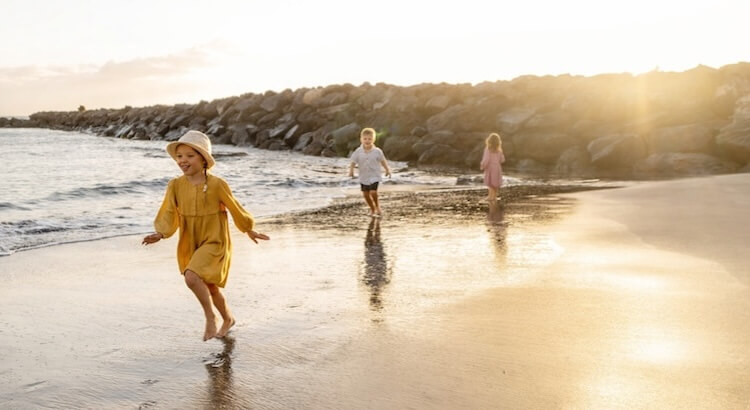
Nap schedules don’t have to stop you enjoying Tenerife. The simplest way to plan toddler-friendly days here is to follow one repeatable rhythm: morning outing, midday nap/quiet time (back at your accommodation), and a late-afternoon easy activity close to home.
If you also keep drives short and avoid too many winding mountain roads, you’ll get more happy hours out of your trip—without sacrificing the rest your toddler needs.
Key takeaways
- • Use the same daily rhythm: morning adventure, nap/quiet time back at base, then an easy late-afternoon plan.
- • Minimize winding-road car rides by choosing “hub days” (South coast, Santa Cruz, or Puerto de la Cruz) and doing nearby outings.
- • Sleep setup matters: blackout curtains, white noise, and accommodation with a separate sleeping area can save the whole holiday.
- • Plan one “must-do” per day and keep the rest optional; toddlers do better with fewer transitions than more attractions.
The toddler day rhythm that works in Tenerife
Tenerife is ideal for a predictable schedule because you can get sunshine, playground time, and a beach walk almost any month. The challenge is not the weather—it’s overstuffed itineraries and long drives that collide with nap time.
Build your day around the nap rather than trying to “fit the nap in.” This is the pattern that most families find easiest to repeat:
- Morning outing (2–4 hours): one main activity, ideally outdoors.
- Midday nap/quiet time (1–2.5 hours): back at your base; keep it boring and dark.
- Late afternoon easy activity (60–120 minutes): low-stakes: promenade stroll, playground, gentle beach time, early dinner.
A simple rule: if the morning outing requires a long drive, make it the only “big” plan that day. But in Tenerife, you can often avoid that entirely by choosing the right base and sticking to nearby areas.
How to minimize winding-road car rides (and why it helps naps)
Tenerife’s most scenic spots are also the ones that can involve hairpin bends and slower mountain routes. That can be rough for toddlers who get carsick, hate being strapped in, or fall asleep for 20 minutes and then skip the real nap.
Instead, think in “hub days.” Pick a base area and do outings that stay mostly on the TF-1 / TF-5 corridors or within town.
- South hub (Costa Adeje / Playa de las Américas / Los Cristianos): lots within short distances, flatter coastal routes, easy promenades.
- Santa Cruz hub (Santa Cruz + nearby San Andrés): city parks, museums/venues, and a famously calm family beach nearby.
- Puerto de la Cruz hub: walkable town vibe and big family attractions nearby.
If you’re not renting a car, Tenerife’s public buses (TITSA) explicitly allow an unfolded pushchair on buses that have a standing area, unless that space is needed by a wheelchair; otherwise you may need to fold it. This matters when you want a short, predictable ride rather than an expensive taxi. You can confirm the pushchair rule in TITSA’s FAQ and Tenerife South Airport’s transport page.
Nap-proof practicals: accommodation, sleep setup, and packing
Your accommodation does more for nap success than any “perfect schedule.” When naps happen, parents get rest too, so this is one place worth being picky.
Prioritize these three nap savers:
- A separate sleeping area: a 1-bedroom apartment, suite, or even a room layout where a travel cot fits behind a door or partition.
- Blackout ability: real blackout curtains are best, but portable blackout solutions help when rentals have bright gaps.
- White noise: masks hallway noise, pool splashes, and late lunch chair-scrapes.
Also plan for Tenerife specifics: bright light, later dinners, and the temptation to stay out longer because the evening is warm. Toddlers don’t care that the sunset is lovely—they care that it’s bedtime.
Quick nap setup checklist (copy/paste before you travel):
- Portable white-noise machine or an offline white-noise app.
- Travel blackout: suction blackout shades or a blackout fabric + clips/tape.
- Two familiar sleep cues (sleep sack, small blanket, same bedtime book).
- Small roll of painter’s tape (gentler on many surfaces for temporary blackout).
- Stroller fan and light blanket for on-the-go calm-down time.
- Snacks you can rely on (hangry toddlers nap worse).
If you need extra baby gear in Tenerife (travel cot, high chair, stroller), consider arranging it ahead so you’re not shopping during nap windows. If you post one request on MiTenerife, local providers can send you options so you can compare availability and timings.
Nap-friendly morning outings by area (low-driving picks)
The goal for mornings is simple: fresh air, toddler movement, and a plan you can exit fast if moods shift.
Below are ideas that are usually manageable with a stroller and don’t require a long mountain drive from the main hubs.
- Playa de Las Teresitas (Santa Cruz area): calm, protected water thanks to a breakwater, with a wide sandy stretch that works well for little ones who like to splash. It’s close to Santa Cruz (San Andrés) so you can pair it with a city-based nap. Several travel guides highlight it as a top family-friendly beach because of the calmer water.
- Playa de Las Vistas (Los Cristianos): a broad, family-oriented beach right by the promenade, so you can do a short “sand + snack” morning and be back for nap without a big drive.
- Palmetum (Santa Cruz): a botanical garden with stroller-friendly paths (described as adapted for strollers and wheelchairs on ticketing/review platforms). It’s great when you want shade, a gentle walk, and a predictable 60–90 minute visit.
- Loro Parque (Puerto de la Cruz): a major animal park that is widely described as stroller-friendly and having baby changing facilities/nursing rooms in visitor guides. It’s a “big morning,” so plan a quiet afternoon afterward.
- Siam Park “The Lost City” (South): Siam Park’s family info highlights a dedicated children’s area (“The Lost City”), which can work for confident water-loving toddlers. Keep expectations realistic and plan a very easy nap window afterward.
One more low-stress option: a simple morning promenade walk (Los Cristianos, Costa Adeje, Puerto de la Cruz) with a playground stop. It doesn’t sound like a “holiday highlight,” but toddlers often remember the slow moments more than the ticketed attraction.
Three ready-to-copy nap-friendly day templates (morning / nap / easy afternoon)
Use these like building blocks. Swap the morning outing, but keep the nap protected and the afternoon simple.
Template 1: South coast (Costa Adeje / Los Cristianos)
- Morning outing: Beach + promenade (e.g., Playa de Las Vistas area), plus a café stop early.
- Midday nap/quiet time: Back to the apartment/hotel; cool shower; white noise; blackout; light lunch after waking.
- Late afternoon easy activity: Short playground stop, then early dinner close to your accommodation.
Template 2: Santa Cruz + San Andrés (low-driving city day)
- Morning outing: Playa de Las Teresitas for sand play and shallow splashing.
- Midday nap/quiet time: Return to Santa Cruz accommodation; nap/quiet time.
- Late afternoon easy activity: Palmetum slow walk or an easy stroll near the Auditorio area.
Template 3: Puerto de la Cruz (one big attraction, calm finish)
- Morning outing: Loro Parque early entry to beat crowds and heat.
- Midday nap/quiet time: Back to base; nap; keep it quiet even if the toddler doesn’t sleep.
- Late afternoon easy activity: Gentle walk and a low-key snack stop; back in time for bedtime routine.
If you’re deciding between “more activities” and “more calm,” choose calm. Toddlers regulate best when the day has repetition and predictable transitions.
What drives the price of toddler-friendly days (and where you can save)
Costs in Tenerife vary by season, how close you stay to the coast, and how many paid attractions you do. You can also spend very little by building your mornings around beaches, promenades, and parks.
These factors usually drive the price up:
- Accommodation layout: a separate sleeping area often costs more than a single-room studio.
- Transport choices: taxis (especially with child seats) can add up versus short local drives or bus routes.
- Ticketed attractions: theme parks and animal parks can turn into a “whole day” cost with food, lockers, and extras.
- Last-minute planning: spontaneous changes near nap time often mean paying for convenience.
Where families often save money (and stress):
- Do one paid attraction every 2–3 days, not daily.
- Choose walkable bases so late afternoons don’t require transport.
- Shop simple lunch foods for post-nap “second lunch.”
- Book accommodation with a kitchenette so you’re not searching for toddler-appropriate meals at peak hunger.
What to ask before booking (so naps don’t fall apart)
Whether you’re booking accommodation, a day tour, or even a taxi, these questions prevent the most common nap-time problems.
- Is there a separate sleeping area or a quiet corner where a travel cot fits?
- Do the windows have blackout curtains (not just sheer blinds)?
- Is the room quiet in the early afternoon (pool music, road noise, hallway traffic)?
- Can we get an early check-in or is there a quiet space if we arrive at nap time?
- How long is the drive, and does it involve winding mountain roads?
- If we need a taxi, can you provide a proper child seat and confirm the child’s age/weight range?
- For attractions, can we re-enter after leaving for nap, or is it one entry only?
- Are there baby changing facilities and somewhere to sit in shade?
If you’re coordinating multiple services (accommodation extras, transport, or baby gear), it often helps to put everything in writing so timing stays consistent with nap windows.
Want your plans to fit your toddler’s nap schedule instead of fighting it? Post your request on MiTenerife and get the best offers within 1 hour.