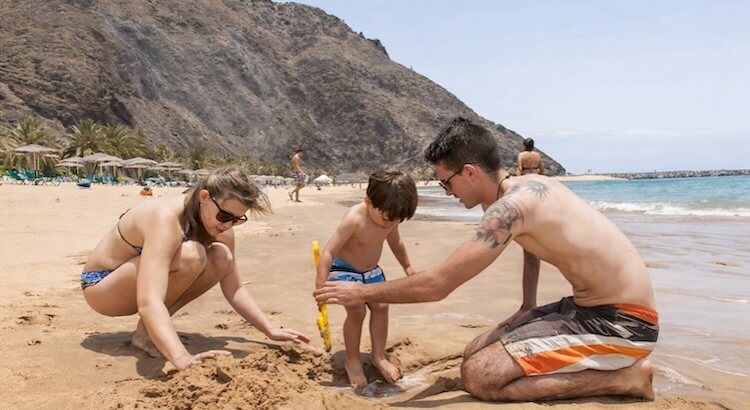
Tenerife sun safety for kids comes down to one repeatable routine: plan beach time for early morning or late afternoon, keep skin covered where you can, and treat sunscreen as something you reapply on a timer (especially after water and towel-drying). Because the Canary Islands can reach “very high” (UV 8–10) and “extreme” (UV 11+) UV levels, you’ll get better results by building shade, clothing, and hydration into the day rather than relying on sunscreen alone.
Key takeaways
- • In Tenerife, schedule outdoor play for mornings and late afternoons and avoid the strongest sun window whenever you can.
- • Use “cover first, cream second”: rash vests, hats, and shade reduce how much skin needs constant sunscreen.
- • Reapply sunscreen every 2 hours, and immediately after swimming, sweating, or towel-drying.
- • Wind and water cool the skin but do not reduce UV risk—set reminders and rotate shade breaks.
- • Know overheating signs (dizziness, vomiting, confusion, very hot skin) and cool your child down fast if they appear.
Why Tenerife sun needs a different “family routine”
Tenerife sits far enough south that UV can stay high even when the air temperature feels mild, and it’s common to get a cooling trade-wind breeze on the coast. That combination is great for holidays and terrible for “sun judgement,” because kids don’t feel as hot as they actually are.
Local reporting on AEMET/health alerts regularly describes Canary Islands UV as “very high” (around 8–10) and sometimes “extreme” (11+). At those levels, unprotected skin can burn quickly, especially around midday.
- Assume UV is strong even on slightly cloudy days and even when the wind is cooling.
- Assume sand and water bounce light onto faces, chins, ears, and under hats.
- Assume kids will sweat, swim, wipe their faces, and rub sunscreen off.
For that reason, many child-health authorities recommend minimizing peak-time exposure (often around late morning to mid-afternoon) and using multiple layers of protection: shade, clothing, and sunscreen.
The practical Tenerife routine (before you leave home)
Do these steps once per beach day and you’ll avoid 80% of the “we thought we were fine” sunburns.
- Check the day’s UV forecast and plan the beach for morning and/or late afternoon.
- Pack a pop-up shade tent or umbrella plus a clip-on shade for the stroller.
- Dress kids in a rash vest/swim shirt and a wide-brim hat (bring a spare hat).
- Pack sunglasses for kids who’ll tolerate them (UV protection matters at the beach too).
- Bring two sunscreens: a main bottle and a small “top-up” stick or mini for face/ears.
- Bring a timer/reminder plan (phone alarms work) for sunscreen and water breaks.
Sunscreen timing that actually works: Apply sunscreen before you leave your accommodation (or at least 15–30 minutes before intense sun exposure), then reapply on a schedule and after anything that removes it. NHS guidance recommends reapplying at least every 2 hours, and again after swimming, sweating, or towel-drying.
Choose clothing that makes sunscreen easier: A long-sleeve rash vest means you only have to maintain sunscreen on legs, hands, feet, face, ears, and neck. Wet clothing is not reliable UV protection, so a proper rash vest or UPF-rated swim top is a better bet than a thin cotton T-shirt.
Infants under 6 months: FDA/AAP guidance emphasizes keeping babies under 6 months out of direct sun as the first line of protection, using shade and protective clothing, and using sunscreen only on small exposed areas if shade/clothing aren’t enough (and ideally after discussing with your pediatrician).
Beach timing strategy (morning + late afternoon)
If you only change one thing in your Tenerife plan, change the timing. A “split beach day” is usually easier with kids and kinder to skin.
- Morning beach: arrive early for play, paddling, and calmer routines.
- Midday reset: go indoors for lunch and naps (or at least deep shade).
- Late afternoon beach: return for another swim and sunset walk.
Many health organizations advise minimizing exposure during the strongest sun window (often cited as roughly 10 a.m. to 4 p.m., or 11 a.m. to mid-afternoon depending on the guidance). In the Canaries, public health messaging has also emphasized avoiding the central daytime hours during very high UV days for young children.
At the beach: shade planning, reapplication schedule, hydration, and rash vests
Think of your “base” as a shaded home spot, then do short sun bursts for swimming and sand play.
- Set up shade first (umbrella or pop-up), then unpack snacks, water, and toys.
- Put kids in rash vests immediately, even if they “feel hot” at first.
- Rotate a simple cycle: 20–30 minutes play + 10 minutes shade/water break.
Reapplication schedule (simple and realistic):
- Apply before you leave (or before you step onto the promenade/sand).
- Reapply every 2 hours as a baseline.
- Reapply immediately after swimming, sweating, or towel-drying.
- Top up face/ears/nose/hands more often if kids are wiping or rubbing.
Water and wind are the classic Tenerife trap. Water reflects UV and washes sunscreen off, and wind makes parents underestimate exposure. That’s why the timer matters more than “how hot it feels.”
Hydration routine (kid-friendly): Don’t wait for thirst, because kids often won’t notice it. Offer water at every shade break and after every swim.
- Bring water plus hydrating snacks (watermelon, oranges, cucumber, yoghurt pouches).
- Use a named bottle per child so you can track who is drinking.
- Watch nappies/urine: darker urine or dry nappies can signal dehydration.
Toddlers in strollers: UPF shade, ventilation, and “cooling without cooking”
Stroller naps on a sunny promenade are common in Tenerife, and that’s exactly when overheating sneaks up. Your goal is shade and airflow.
- Use a stroller sun canopy or UPF shade that still allows air to circulate.
- Position the stroller in real shade (under trees, awnings, or behind a wall), not just “partial shade.”
- Dress toddlers in light, breathable layers and remove extra blankets.
- Do frequent “neck and back checks” for sweat and heat (not just hands/feet).
- Offer small sips of water often (or milk feeds for younger babies, as advised by your healthcare professional).
Be cautious about covering a stroller with a solid cloth, because it can reduce ventilation and raise the temperature inside the stroller. A purpose-made sunshade that keeps airflow is safer in hot, sunny conditions.
Signs of overheating (and what to do immediately)
Sunburn is painful, but heat illness can become urgent quickly. If you see symptoms, act fast and don’t “wait it out.”
Possible heat exhaustion signs in children:
- Tiredness, dizziness, headache, nausea or vomiting.
- Excessive sweating with pale, clammy skin.
- Muscle cramps or unusual weakness.
- In babies/toddlers: unusual sleepiness, irritability, refusing to drink/feed.
What to do immediately (first aid steps):
- Move your child to a cool, shaded, well-ventilated place (indoors if possible).
- Give cool water in small, frequent sips (or appropriate fluids for age).
- Cool them quickly: spray/sponging with cool water, cool wet cloths, and cold packs around neck/armpits.
- Remove excess clothing and stop all active play.
Heatstroke red flags (medical emergency): confusion, seizures, loss of consciousness, very high temperature, or red hot skin that may be dry or sweaty. If you suspect heatstroke, seek emergency help immediately and continue cooling while you wait (local emergency numbers in Spain are 112).
Quick checklist: your “Tenerife sun-safe beach bag”
- UPF rash vest/swim top (and a spare if possible).
- Wide-brim hat (plus a backup hat).
- Broad-spectrum, water-resistant sunscreen (SPF 30+; many families choose SPF 50+).
- Mini face top-up (stick or small bottle) for ears/nose/cheeks.
- Pop-up shade/umbrella + pegs/weights for wind.
- Water bottles + hydrating snacks.
- After-sun care basics: cool compress cloth, gentle moisturiser.
What to ask before booking a family beach day or outdoor activity
If you’re joining a boat trip, surf lesson, coastal hike, or a kids’ activity outdoors, these questions help you avoid surprises.
- What time does the activity start and finish, and how much is in direct sun?
- Is there reliable shade on-site (awnings, indoor breaks, shaded seating)?
- Are there fresh water refill points and toilets nearby?
- Is the activity suitable for toddlers/infants (especially under 6 months) in high UV?
- Can we take breaks whenever needed, or is it continuous (e.g., long boat trip)?
- What wind conditions are typical, and will wind chill mask sun exposure?
- Is there a clear plan if a child becomes overheated or unwell?
If you want to make this even easier, MiTenerife can help you compare family-friendly services (from childcare to drivers and private chefs) so your day plan includes shade breaks, hydration, and realistic timing. You can also post one request and compare offers from local providers.
Final tip: treat Tenerife sun like a “system,” not a single product. Shade + rash vest + hat + timer-based reapplication + water breaks will keep most families comfortable and burn-free.