Cráter – Identidad Canaria (inside Royal Hideaway Corales Villas, Costa Adeje) is a modern Canarian tasting-menu restaurant led by chef Eduardo Domínguez, built around a simple idea: each season, it explores one Canary Island’s ingredients and recipes in a contemporary way.
If you want a “Canary cuisine” night that feels rooted in local product (gofio, papas, beans, goat, local fish, island wines) but plated like fine dining, Cráter is a strong pick. Expect tasting menus (not à la carte), an educational service style, and pricing that’s higher than the tourist strip—but also a completely different level of sourcing, technique, and pacing.
Key takeaways
- • Choose between two tasting menus (often listed around 95–115€ per person, drinks extra), and tell the team how “traditional” or “experimental” you want your experience to feel.
- • Look for dishes built on iconic Canarian pantry staples—gofio, millo (corn), local potatoes, beans, goat, and mojos—reinterpreted with modern technique.
- • For wine, lean into the Canary Islands: volcanic whites (Listán Blanco, Malvasía Volcánica, Vijariego) and lighter reds (Listán Negro) usually pair brilliantly with the menu’s salty, smoky profile.
- • Compared with nearby tourist-strip restaurants, Cráter costs more, but you’re paying for a multi-course journey, higher-touch service, and a wine program focused on small Canarian producers.
What to expect at Cráter – Identidad Canaria (location, format, vibe)
Cráter sits within Royal Hideaway Corales Villas in Costa Adeje and is positioned as a “signature cuisine” restaurant with an open-kitchen feel and ocean-facing views. The concept is explicitly seasonal: it “dives into” one island at a time, building a narrative tasting menu around that island’s recipes, products, and food culture.
In practice, that means your experience can change meaningfully across the year. Recent coverage and listings highlight a La Palma-focused season, with menu names that reference local traditions and festivities.
- Format: tasting menus (two lengths are commonly offered).
- Service: guided and explanatory (great if you like context with each dish).
- Best for: food-focused couples, special occasions, curious travelers who want “Canarian, but modern.”
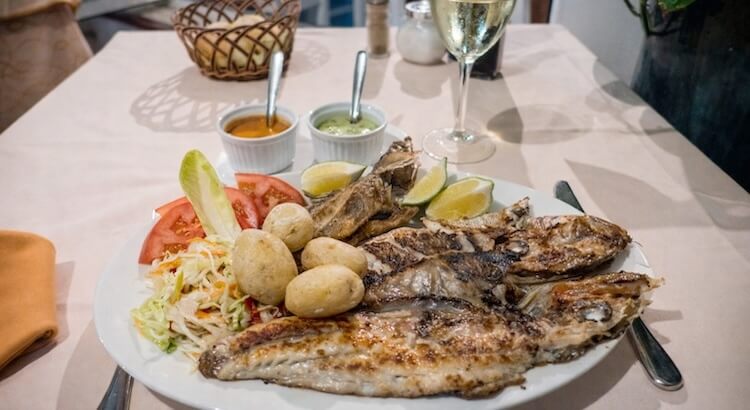
- Not ideal for: quick dinners, picky eaters who dislike surprises, or anyone wanting a classic à la carte fish grill.
Menu pricing fluctuates by season, but public listings often show a shorter menu around 95€ and a longer one around 115€ per person (usually excluding drinks). Always confirm the current season/menu when booking.
Must-try plates that showcase local Canarian products (and what they mean)
The most rewarding way to “eat Cráter” is to look past the fine-dining presentation and spot the Canarian backbone underneath. Multiple sources reference a core set of dishes that lean heavily on local pantry staples and island agriculture.
Here are the plates and ingredients to watch for, and why they matter.
- Puntos cardinales (opening bites): often presented as a series of small snacks that set the island story and showcase local staples early.
- Tomate de La Galga: a tomato-led course that highlights island produce and dairy (often goat-based) in a clean, bright combination.
- Escachón palmero: a La Palma classic at heart (potato-based, with cheese/gofio/mojo elements), often reworked into a richer, more technical plate.
- Judía mantecosa (buttery beans): a humble ingredient elevated; it’s a good “tell” that the kitchen is serious about agricultural identity, not just luxury seafood.
- Millo del país (local corn): another cornerstone ingredient that tends to show up as texture, cream, or crisp—great with volcanic whites.
- Borrallera (often potato/sweet potato with pork): this tends to be one of the more comforting, savory “island” moments, especially when it features cochino negro (Canarian black pig).
- Sopa de picadillo: a nod to traditional brothy soups; in modern tasting menus, this can arrive clarified, concentrated, or in a more delicate format.
- Chocomojo: a dessert-like signature that plays with the idea of mojo (typically savory) by blending it with chocolate and gofio for a sweet/savory finish.
How to use this list: when a menu is presented as a story, you won’t always see “papas arrugadas” written plainly. Instead, look for the ingredient words: papa, gofio, millo, mojo, cabrito/cabra, local beans, and references to specific places in the islands.
How to order “more traditional” vs “more modern” (without sounding awkward)
Because Cráter is tasting-menu-driven, “ordering” is less about choosing dishes and more about steering the experience. Your best tool is a clear preference statement when you book and again when you sit down.
- If you want more traditional: ask the team to emphasize the story behind the dishes, point out the original recipes, and recommend the pairing that best matches classic Canarian flavors (mojos, smoked notes, stews, goat).
- If you want more modern: ask for the most technique-forward pacing and the most exploratory wine pairing (including skin-contact whites, high-altitude reds, and offbeat local varieties).
- If you’re sensitive to strong flavors: mention it early. Gofio, smoked cheeses, and mojos can be intense, and the kitchen can often steer you to brighter, produce-led passes.
- If you love seafood: ask which courses best showcase local fish and how they source it that week.
Pro tip: tell them what you love in plain words (“more rustic,” “less sweet,” “I love goat cheese,” “I don’t like smoke”) rather than trying to translate dishes. A good dining room will interpret your preferences into the menu you’re already committed to.
Canarian wine pairing: what to try (and why it works here)
Cráter’s own description puts a spotlight on its cellar of Canarian wines and small producers, supported by Spanish and international bottles. This is exactly the kind of menu where local wine shines because volcanic soils and Atlantic influence tend to produce wines with high acidity, salinity, and smoky-mineral notes that handle mojos, grilled elements, and rich stews.
Ask the sommelier for “wines from Tenerife and the featured island of the season.” If the season is La Palma-focused, you can also ask whether they have traditional island specialties like vino de tea (a distinctive style linked to La Palma’s history).
- Listán Blanco (Tenerife whites): crisp, saline, and food-friendly; excellent with tomato courses, local fish, and anything with mojo verde.
- Malvasía Volcánica (often from Lanzarote, sometimes broader Canarian DOPs): aromatic and textured; great with richer seafood or corn-based courses.
- Vijariego (white): higher-acid, structured; pairs well with smoky, cheesy, or gofio-heavy dishes where you want a “cleaning” finish.
- Listán Negro (Tenerife reds): typically lighter-bodied and fresh; works with pork, black pig, and goat without overpowering subtle sauces.
How to choose a pairing style: if you like classic structure, ask for “a Canarian pairing with mostly still whites and one lighter red.” If you like experimentation, ask whether they can include a skin-contact white (orange wine) or a high-altitude, minimal-intervention bottle from Tenerife.
Pricing vs tourist-strip restaurants in Costa Adeje (what you’re really paying for)
In the tourist strip of Costa Adeje, it’s common to see casual dining where you order mains and share starters, with pricing driven by location, foot traffic, and speed. Cráter is a different product: a multi-course tasting menu with a curated narrative, higher staff-to-guest ratio, and a wine program designed to be part of the experience.
Public listings often show Cráter’s tasting menus around 95–115€ per person (drinks extra). That places it above typical tourist-strip dinner spending, especially if you add pairings, but closer to other “destination” dining in the area.
What drives the price at Cráter (and similar tasting-menu restaurants in Adeje):
- Number of courses and prep complexity (more steps = more labor and mise en place).
- Specialty local sourcing (small producers, seasonal island products, limited batches).
- Service style (guided explanations, pacing, and table-side attention).
- Wine choices (Canarian bottles can be limited-production, and pairings add up quickly).
- Setting (hotel fine-dining infrastructure and terrace views).
Rule of thumb: if you want a “great value fish and papas” night, the strip can deliver. If you want a curated Canarian identity story told through technique, Cráter will feel worth the premium.
Booking tips, best timing, and a quick checklist
Cráter is frequently positioned as a dinner destination, and many guests plan the evening around it. Book ahead, especially for weekends, holiday periods, and sunset-adjacent seating.
- Reserve early if you want a specific time slot (especially prime dinner hours).
- Confirm the current season’s island focus so you know what the menu is “about.”
- Share allergies and strong dislikes at booking, not at the last second.
- Decide in advance: wine pairing, by-the-glass, or a bottle (pairing is easiest for first-timers).
- Plan your transport if you’ll drink (taxis are easy in Costa Adeje, but don’t leave it to chance late at night).
Quick checklist for the day of your reservation:
- Eat a light late lunch so you can enjoy the full tasting menu.
- Bring a light layer for terrace seating (evenings can feel cool by the coast).
- Arrive a little early to settle in and start relaxed.
- Tell the team your “traditional vs modern” preference in one sentence.
- Set a wine budget if you’re not doing the fixed pairing.
What to ask before booking (so you get the experience you want)
- Which island is the menu focused on right now, and when does the season change?
- What’s the difference between the two tasting menus besides the number of courses?
- Can you adapt the menu for allergies or pescatarian/vegetarian preferences?
- Is the wine pairing mostly Canarian wines, and can you request “all-Canary”?
- How long should we plan for the full experience (typical duration)?
- Do you have a terrace table preference, and is it weather-dependent?
- Is there a dress code or any hotel-entry guidance for non-guests?
- What’s the easiest transport plan after dinner if we do pairings?
If you’re planning a special meal in Adeje and want to compare options quickly (or coordinate transport, babysitting, or a private chef at your villa for another night), MiTenerife can help you post one request and get multiple local offers back.
When you’re ready, visit mitenerife.com to get the best offers within 1 hour.